


PVC belts dominate in food processing, packaging, parcels, and light-to-medium duty manufacturing because they’re clean, light, and flexible. When mechanical fasteners aren’t ideal—or you need a smooth, snag-free joint—a PVC conveyor belt adhesive delivers strong, flexible splices and dependable patch repairs.
PVC Belts 101 (What Makes Them Tricky)
PVC’s low surface energy and plasticisers make it harder to wet-out with generic adhesives. Temperature swings, flex cycles over small pulleys, sanitation washdowns, and mild chemicals all stress the splice. Your adhesive must balance:
- High peel strength with flexibility (no hinge-line cracking).
- Plasticiser resistance to prevent softening over time.
- Temperature performance suitable for your line (chill rooms to warm packing halls).
- Hygiene-friendly handling where applicable.
When to Choose Adhesive Over Heat Weld/Mechanicals
- On-line patching where disassembly or hot tools aren’t feasible.
- Field repairs on remote runs or during tight windows.
- Low-profile joints that must pass scrapers, guides, or tight transfers.
- Supplementing a mechanical fastener with an edge seal to stop wicking.
What to Look For in a PVC Belt Adhesive
- PVC/PU compatibility with documented TDS data.
- Two-component cure for predictable strength and chemical resistance.
- Flexible bond line—survives repeated flex and small pulley diameters.
- Reasonable pot life and assembly time for accurate layup.
- Clear application steps: surface prep, open time, pressure, cure.
- Food-adjacent considerations (where relevant): low odour, easy clean-down.
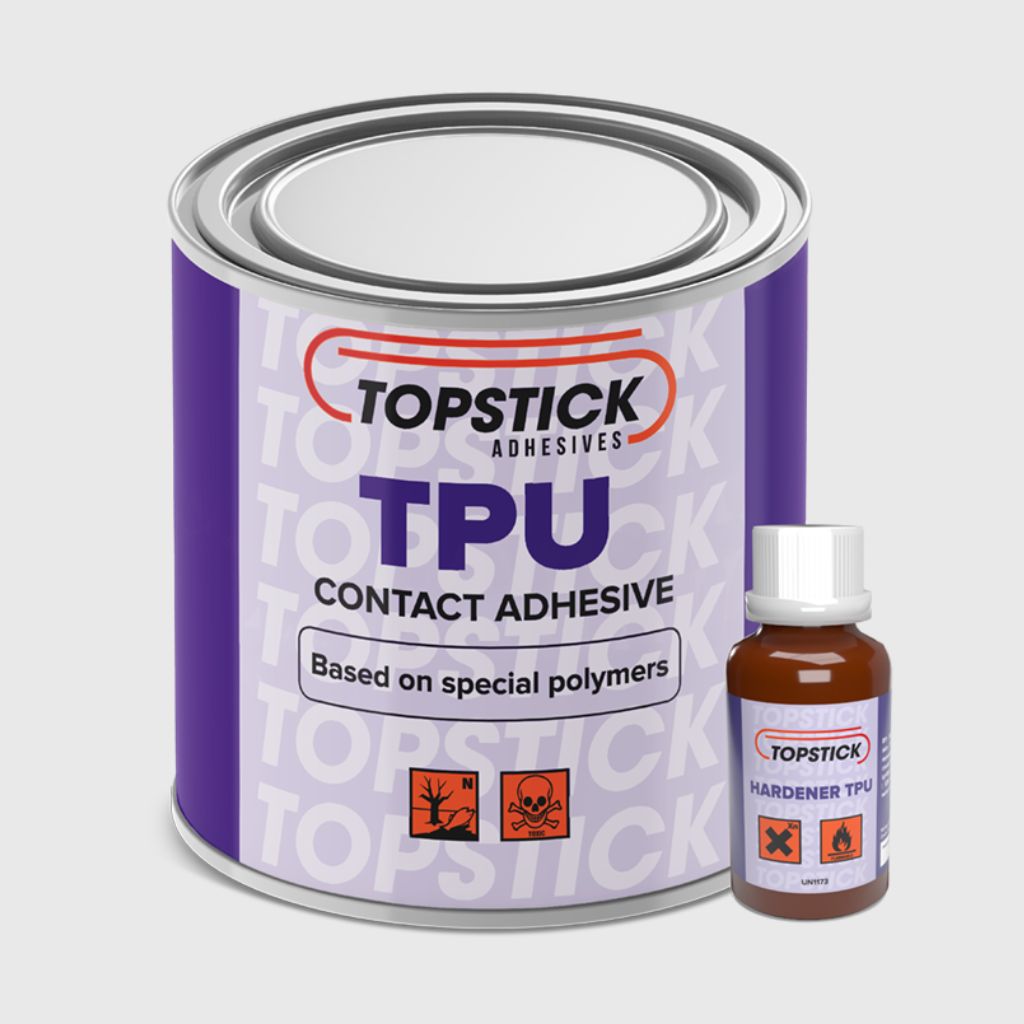
Product Spotlight: Topstick TPU
What it’s for: PVC and polyurethane belt bonding, edge-sealing and component repairs.
Why maintenance teams use it:
- Two-component chemistry for durable, flexible bonds.
- Excellent PVC and PU substrate wet-out and adhesion.
- Field-friendly application; consistent cure profile.
View the full product range.
Step-By-Step: A Reliable PVC Splice/Patch
- Identify belt construction (PVC cover, fabric type, thickness, pulley diameters).
- Surface prep: Degrease → abrade lightly (avoid glazing) → dust-off.
- Mix TPU correctly (ratio per TDS), note pot life.
- Apply thin, even coats to both sides; respect open time.
- Assemble under pressure (rollers/press board); avoid squeeze-out voids.
- Cure per spec before tensioning; then retension and track.
- Inspect: peel edges, smooth transition, no bubbles; re-roll if needed.
Troubleshooting (Save the Shift)
- Edge lifting: Inadequate pressure or too long/short open time → re-abrade edge, re-bond.
- Brittle hinge line: Adhesive too stiff for pulley diameters → verify product choice.
- Softening/oiliness: Plasticiser migration → ensure PVC-rated adhesive; consider edge seal.
- Early peel in washdown: Cure not reached or water ingress → extend cure, improve edge sealing.
PVC vs PU: Choosing Wisely
If your line includes PU-coated components (rollers, scrapers, guides), using Topstick TPU across PVC and PU interfaces simplifies inventories and ensures consistent flexibility at the joint.
Pairing With Primers & System Components
- Metal interfaces: Use Topprime on drive drums, guides or brackets before bonding PVC covers.
- Rubber transitions: Where PVC meets rubber lagging, test adhesion or use a rubber-rated adhesive on the rubber side and TPU on the PVC side if required.
For belt make-up details or a second opinion on splice geometry, contact us.